Post
Velvet, Leather, or Fabric? A Complete Guide to Chair Upholstery Materials
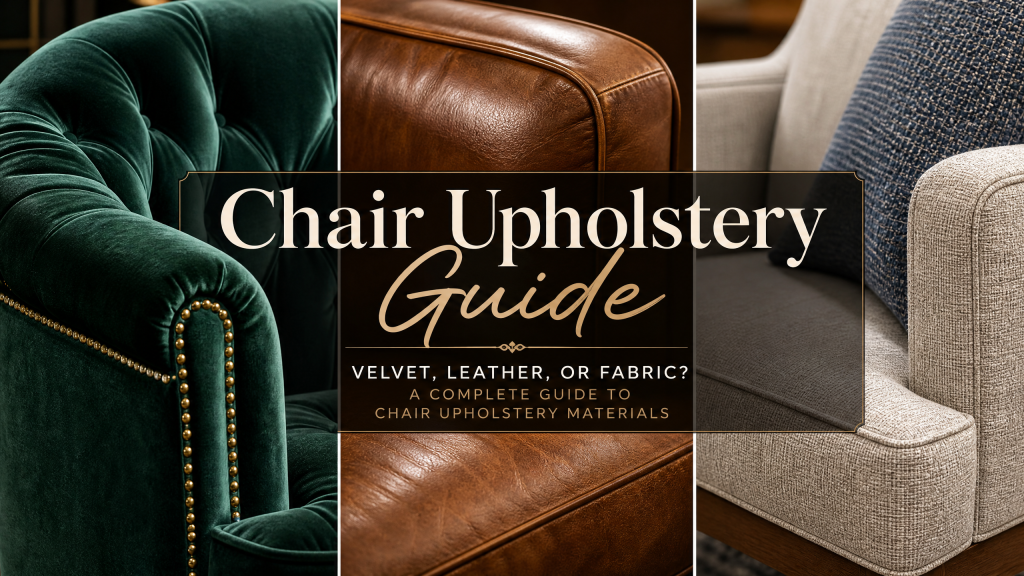
Jun
Velvet, Leather, or Fabric? A Complete Guide to Chair Upholstery Materials
The upholstery of a chair does more than just cover the cushioning beneath it. It determines the chair’s visual character, its tactile feel, its durability, its maintenance requirements, and to a significant degree, its price. Choosing the right upholstery material for any chair is a decision that balances aesthetics, practicality, and budget. This comprehensive guide walks you through the most popular upholstery options so you can make an informed choice for every chair in your home.
Leather: Timeless Luxury and Durability
Genuine leather is among the most prestigious and enduring upholstery materials available. Full-grain leather, which uses the outermost layer of the hide and retains the natural grain texture, is the highest quality and most durable type. It develops a beautiful patina over years of use, growing more characterful rather than looking worn. Top-grain leather, which has been lightly sanded and may have a protective finish applied, is slightly less expensive and more stain-resistant while still offering excellent quality.
Beyond these, Aniline leather is known for its natural look and soft feel, as it’s dyed using soluble dyes without covering the natural surface. It’s highly breathable but also more susceptible to stains and fading. Semi-Aniline leather offers a compromise, with a light surface coating providing some protection while retaining much of the natural look and feel. Protected or Pigmented leather has a polymer surface coating with pigments, making it highly durable, stain-resistant, and consistent in color, ideal for high-traffic areas, though it may lack the natural softness of less processed leathers.
Leather upholstery is easy to clean — most spills can be wiped away quickly before they penetrate. This makes it an excellent choice for dining chairs, home office chairs, and any chair in a home with children or pets. Leather is also naturally hypoallergenic and does not trap dust or allergens the way fabric upholstery can, which makes it a good choice for allergy sufferers.
The drawbacks of leather include its temperature sensitivity — it can feel cold in winter and warm and slightly sticky in summer — and its higher cost compared to fabric options. Leather also requires periodic conditioning to prevent drying, cracking, and fading, particularly in environments with low humidity or strong sunlight exposure. For optimal longevity, it’s recommended to condition leather upholstery every 6-12 months using a specialized leather conditioner.
Velvet: Rich Texture and Visual Drama
Velvet upholstery has experienced a massive resurgence in interior design popularity over recent years, and it is not difficult to understand why. The dense, soft pile of velvet creates a richness of texture and depth of color that no other upholstery material can quite replicate. Velvet chairs immediately elevate any space they occupy, adding a sense of luxury and sophistication.
Velvet can be made from various fibers, each offering unique qualities. Traditional velvet, often made from silk, is exquisitely soft and lustrous but very delicate and expensive. Cotton velvet provides a more matte finish and excellent durability for natural fibers. Synthetic velvets, typically polyester or rayon, are the most common in modern upholstery due to their cost-effectiveness and enhanced performance.
Modern performance velvets are engineered to address the practical limitations of traditional velvet. Traditional velvet was relatively delicate, prone to crushing, and difficult to clean. Performance velvet, typically made from polyester or a polyester-cotton blend, resists crushing and staining much better while retaining the beautiful visual and tactile qualities of the original material. For most residential applications, a good performance velvet offers an excellent balance of beauty and practicality.
Velvet upholstery requires gentle care to maintain its appearance. Vacuum regularly with a soft brush attachment to remove dust and prevent dirt from embedding in the pile. Brush occasionally with a soft upholstery brush in the direction of the pile to restore its appearance after use and prevent matting. For spills, blot immediately without rubbing — rubbing can mat the pile permanently. Distilled water can sometimes help to gently lift minor stains, but always test on an inconspicuous area first.
Cotton and Linen: Natural Comfort and Casual Elegance
Natural fiber upholstery fabrics like cotton and linen have a relaxed, organic quality that works beautifully in casual and transitional interior settings. They breathe well, feel comfortable against bare skin, and come in a virtually unlimited range of colors and weave textures. Cotton upholstery tends to be soft and comfortable with a slight natural sheen, while linen has a more textured, matte surface that gives it a distinctly organic character and is known for its strength and coolness. Both are eco-friendly options, especially when sourced organically.
The primary practical limitation of natural fiber upholstery is susceptibility to staining. Cotton and linen both absorb liquids readily, and stains can be difficult to remove completely once they have set. They are also prone to wrinkling, which can contribute to their relaxed aesthetic but may not suit a formal setting. Treated versions of these fabrics with stain-resistant finishes are available and offer better practical performance. Often, cotton and linen are blended with synthetic fibers like polyester or rayon to improve durability, reduce wrinkling, and enhance stain resistance, offering a balance between natural feel and practical performance. For chairs that will see occasional use in low-traffic areas, untreated cotton or linen is perfectly appropriate.
Microfiber: Softness, Durability, and Easy Care
Microfiber has become a favorite in many homes, particularly those with children and pets. This synthetic fabric, typically made from 100% polyester, is renowned for its incredibly soft, suede-like texture, often mistaken for natural suede. The individual fibers are exceptionally fine, much thinner than a human hair, creating a dense, tight weave.
The tightly woven structure of microfiber is what gives it its impressive practical advantages. It inherently resists spills and stains, as liquids tend to bead up on the surface rather than immediately soaking in. This makes it incredibly easy to clean with just a damp cloth. Microfiber is also highly durable, resistant to pilling, and less prone to scratching or tearing compared to many other fabrics, making it an excellent choice for high-traffic furniture. Furthermore, it’s hypoallergenic, as its dense weave makes it difficult for dust mites and allergens to penetrate. While it doesn’t breathe as well as natural fibers, its comfort and resilience make it a top contender for everyday use.
Wool: Natural Resilience and Sophistication
Wool upholstery offers a unique blend of natural luxury, durability, and practical benefits. Sourced from sheep, wool fibers are naturally strong, resilient, and elastic, meaning they resist crushing and wrinkles and tend to bounce back to their original shape. Wool is inherently flame-resistant, a significant safety advantage, and also possesses natural lanolin, which provides a degree of stain resistance.
Beyond its robustness, wool is a highly breathable fiber that helps regulate temperature, feeling warm in winter and surprisingly cool in summer. It’s available in a wide array of textures, from smooth, tightly woven worsteds to coarser, felted or tweed options, making it versatile for various design aesthetics, from classic to contemporary. While wool can be a higher initial investment, its longevity and natural properties make it a sustainable and enduring choice for quality upholstery. Regular vacuuming and immediate spot cleaning are key to maintaining its pristine appearance.
Performance Fabrics: The Practical Choice
Performance fabrics represent one of the most significant advances in upholstery materials in recent decades. These engineered fabrics — typically made from solution-dyed acrylic, polyester, or their blends — are designed to resist staining, fading, and moisture while looking and feeling like high-quality natural fabrics. Brands like Sunbrella, Crypton, and Revolution Fabrics have pioneered technologies that make their materials virtually impervious to common household mishaps. Many leading performance fabric brands offer materials that are bleach-cleanable, making them suitable even for the most demanding household environments, including outdoor use.
The secret to performance fabrics often lies in their solution-dyed fibers, where the color is added during the fiber production stage, making it integral to the material rather than just a surface dye. This ensures exceptional fade resistance, even in direct sunlight. Furthermore, these fabrics often incorporate moisture barriers and stain-resistant treatments at a molecular level, preventing spills from penetrating the fibers. For families with young children, pet owners, or anyone who values low-maintenance furniture without sacrificing aesthetics, performance fabrics are an excellent choice. They are available in an enormous range of colors, patterns, and textures that convincingly replicate more delicate materials at a practical advantage.
Key Factors to Consider When Choosing Your Upholstery
Selecting the ideal upholstery material involves weighing several practical and aesthetic considerations. By asking yourself a few key questions, you can narrow down the options and make a choice that perfectly suits your needs and lifestyle.
- Durability and Traffic: How much use will the chair get? For high-traffic areas or chairs in homes with children and pets, look for materials known for their resilience, such as protected leather, microfiber, wool, or performance fabrics.
- Maintenance and Cleaning: How much time and effort are you willing to put into cleaning? Easy-to-clean options like leather and microfiber are great for busy households, while delicate materials like silk velvet or untreated linen require more careful attention.
- Aesthetics and Style: What look are you trying to achieve? Velvet brings luxury, leather offers classic sophistication, natural fabrics provide a casual elegance, and a wide array of synthetics can mimic almost any texture or pattern.
- Comfort and Feel: How does the material feel against your skin? Consider breathability (natural fibers excel here), temperature regulation (leather can be temperature-sensitive), and softness (velvet, microfiber).
- Budget: Upholstery materials vary widely in price. Genuine full-grain leather and high-end natural velvets are typically more expensive, while synthetic options like polyester microfiber or performance fabrics offer excellent value.
- Allergies and Health: For allergy sufferers, leather and microfiber are often recommended as they tend not to trap dust and allergens as easily as some woven fabrics.
- Environmental Impact: Consider sustainable options like organic cotton, linen, or wool, or durable synthetics that will last longer and reduce the need for replacement.
General Upholstery Care and Maintenance Tips
Regardless of the material you choose, a consistent care routine will significantly extend the life and beauty of your upholstered chairs. Here are some universal tips:
- Regular Vacuuming: Use a soft brush attachment on your vacuum cleaner to gently remove dust, dirt, and pet hair at least once a week. This prevents grime from embedding deep into the fibers.
- Address Spills Immediately: The faster you act on a spill, the more likely you are to prevent a permanent stain. Blot (don’t rub!) liquids with a clean, dry white cloth, working from the outside of the spill inward.
- Read the Manufacturer’s Tag: Most upholstery comes with a cleaning code (W, S, WS, X). Always refer to this tag for specific cleaning instructions and recommended products.
- Avoid Direct Sunlight: Prolonged exposure to direct sunlight can cause almost any fabric to fade and deteriorate over time. Position chairs away from harsh sunlight or use blinds/curtains.
- Rotate Cushions: If your chair has removable cushions, flip and rotate them regularly to ensure even wear and prevent permanent indentations.
- Professional Cleaning: For deep cleaning or stubborn stains, consider hiring a professional upholstery cleaner every 12-24 months. They have specialized equipment and knowledge to safely clean various materials.
Frequently Asked Questions About Chair Upholstery
Which upholstery material is best for homes with pets?
Microfiber, performance fabrics (like Sunbrella or Crypton), and protected leather are generally excellent choices for pet owners. They are durable, stain-resistant, and less prone to pet hair clinging or scratching compared to delicate fabrics.
What is the easiest upholstery fabric to clean?
Microfiber and performance fabrics are widely considered the easiest to clean due to their tight weaves and stain-resistant treatments. Protected leather is also very easy to wipe clean.
Is there an upholstery material that is good for allergy sufferers?
Yes, leather and microfiber are often recommended for allergy sufferers because their dense structures prevent dust, pet dander, and allergens from deeply embedding. Unlike many woven fabrics, they can be easily wiped down.
How long should good quality upholstery last?
With proper care, high-quality upholstery can last anywhere from 7-15 years, or even longer for premium materials like full-grain leather. Factors like usage, environment, and maintenance significantly impact longevity.
Can I reupholster an old chair, and is it worth it?
Absolutely! Reupholstering an old chair is a fantastic way to give it a new life, update its style, and contribute to sustainability. It’s often worth it if the chair has a sturdy frame, sentimental value, or a unique design. The cost can vary based on the chair’s complexity and the chosen fabric.
What’s the difference between natural and synthetic upholstery?
Natural upholstery (e.g., cotton, linen, wool, silk, leather) comes from plant or animal sources. It’s generally breathable, unique in texture, and can be more environmentally friendly. Synthetic upholstery (e.g., polyester, nylon, acrylic, microfiber) is man-made, often designed for enhanced durability, stain resistance, fade resistance, and affordability, though sometimes less breathable.
Our upholstery collection spans all of these material categories, and our team is always available to help you select the right upholstery for your lifestyle, aesthetic preferences, and budget. Come visit our store to see, touch, and experience our full range firsthand.
