Post
10 Best Task Chairs vs Executive Chairs: What’s Right for Your Office?
Jun
 Task Chairs vs Executive Chairs: What’s Right for Your Office?
 Task Chairs vs Executive Chairs: What’s Right for Your Office?
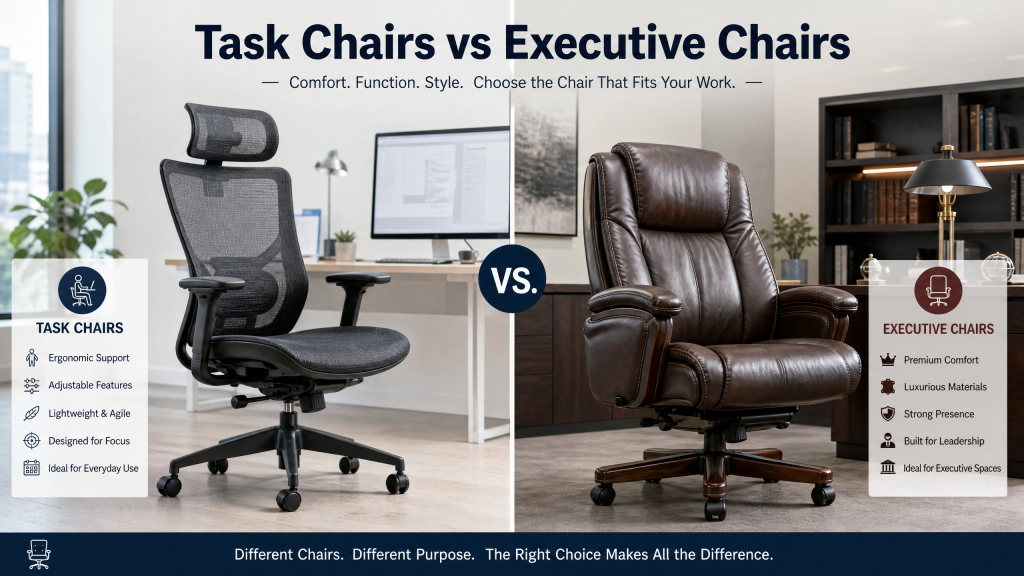
Walk into any office furniture showroom and you will encounter a bewildering variety of chairs organized into broad categories. Two of the most commonly referenced categories are task chairs and executive chairs. While both are designed for use at desks and both come in a wide range of qualities, these two categories have distinct design philosophies, typical use cases, and strengths and weaknesses that make them appropriate for different people and different office environments. This guide explains the key differences and helps you decide which type of office chair is right for your needs, whether for a corporate office or a home setup. Understanding these nuances is crucial for choosing a desk chair that enhances your comfort, supports your posture, and boosts productivity.
Defining the Task Chair
A task chair is designed primarily for functionality and active engagement. The word “task” refers to the chair’s purpose: to support you effectively while you perform the demanding tasks of your work, often for extended periods. Task chairs are typically more compact and agile than executive chairs, with a central focus on adjustability, robust ergonomic support, and the ability to move freely around a workstation. They are engineered to be used intensively for the full working day by people who are actively engaged with a computer, documents, or other desk-bound activities.
The defining characteristics of a quality task chair include a wide range of seat height adjustment, adjustable lumbar support, adjustable armrests, and a recline mechanism designed for active use, often with tension control and multiple lock positions. Task chairs typically have a five-star wheeled base for seamless mobility and a relatively streamlined profile. They prioritize ergonomic function and user well-being over visual status signaling, making them ideal ergonomic chairs for prolonged sitting.
Task chairs are the right choice for anyone who does computer-intensive work for extended periods — programmers, designers, writers, analysts, administrative professionals, and anyone else who spends most of their workday actively engaged with a screen and keyboard. The extensive ergonomic adjustability of a good task chair is directly relevant to the health, comfort, and productivity requirements of this type of work, helping to prevent strain and promote good posture.
Key Ergonomic Adjustments of Task Chairs:
- Seat Height Adjustment: Essential for ensuring your feet are flat on the floor (or a footrest) and your thighs are parallel to the floor, maintaining proper hip alignment.
- Seat Depth Adjustment: Allows you to position the seat so there’s a 2-4 inch gap between the back of your knees and the edge of the seat, preventing pressure on your circulation.
- Lumbar Support: Crucial for maintaining the natural inward curve of your lower back, preventing slouching and reducing back pain. Many task chairs offer height and depth adjustable lumbar support.
- Armrest Adjustability (2D, 3D, 4D):
- 2D: Height and sometimes width.
- 3D: Height, width, and depth (forward/backward).
- 4D: Height, width, depth, and pivot (angle).
Adjustable armrests help support your arms and shoulders, reducing tension when typing. They should allow your arms to form an L-shape at the elbow.
- Backrest Height and Angle Adjustment: Enables you to position the backrest to support the natural curve of your spine and recline for comfort or to change posture throughout the day.
- Tilt Mechanism with Tension Control: Allows you to recline while maintaining support, with tension control to match your body weight and prevent excessive force.
Defining the Executive Chair
Executive chairs were traditionally designed to signal status as much as to provide functional support. The classic executive chair is large, heavily padded, and typically upholstered in genuine leather. It features a high back, often with an integrated headrest, and conveys an aura of authority, importance, and success. These chairs are historically associated with corner offices, boardrooms, and the desks of senior corporate leaders, projecting a distinct professional image.
The design philosophy of executive chairs has traditionally prioritized visual impact, immediate comfort at rest, and the projection of professional status. They tend to be larger and more imposing than task chairs, with generous padding that provides immediate plush comfort but may not offer the same level of dynamic ergonomic support during active keyboard work. The focus often leans more towards aesthetics and luxurious materials.
Modern executive chairs have evolved significantly in response to ergonomic research and changing work habits. Many contemporary executive chairs now incorporate adjustable lumbar support, seat depth adjustment, and other ergonomic features previously found only in task chairs. However, the fundamental design language — large, substantial, premium materials, and a commanding presence — remains distinct from the more functional aesthetic of task chairs. They often blend luxurious appearance with improved support, making them a suitable ergonomic executive chair option.
Hallmarks of Executive Chair Design:
- Premium Materials: Genuine leather (top-grain, full-grain), high-quality bonded leather, or sophisticated fabrics are common.
- Generous Padding: Thick foam cushioning in the seat, back, and armrests for a plush feel.
- High Backrest: Provides full back and head support, often with an integrated headrest, contributing to the chair’s imposing stature.
- Robust Base and Frame: Often feature polished aluminum or chrome bases, indicating durability and luxury.
- Classic Aesthetics: Often feature tufting, stitching details, and wood or metal accents that contribute to a timeless and elegant look.
Key Ergonomic Features: A Deeper Dive
When evaluating office chairs, understanding the specific ergonomic features is paramount, regardless of whether you lean towards a task or executive model. While task chairs historically led in this area, premium executive chairs are catching up.
Lumbar Support: The Spine’s Best Friend
Both chair types can offer lumbar support, but its implementation often differs. Task chairs commonly feature adjustable lumbar support (height and depth), allowing users to precisely position it to fit the curve of their lower back. Executive chairs might have fixed, built-in lumbar support or adjustable options that are less granular than those found in high-end task chairs. For prolonged active work, dynamic and adjustable lumbar support is critical for spinal health.
Seat Design and Adjustments
A good seat pan reduces pressure points and promotes healthy circulation. Task chairs often feature contoured seats with waterfall fronts to ease pressure on the thighs. Seat depth adjustment is vital to ensure proper leg positioning. Executive chairs prioritize plushness, which can be comfortable initially, but if the seat depth isn’t right, it can lead to discomfort or poor posture over time.
Armrest Functionality
While both chair types have armrests, their primary purpose differs. Task chair armrests (especially 3D or 4D) are designed to fully support the forearms, allowing shoulders to relax and reducing strain during typing. Executive chair armrests often prioritize aesthetic integration and luxurious padding, sometimes sacrificing multi-directional adjustability for a fixed, elegant design. For intensive keyboard use, highly adjustable armrests are superior.
Tilt and Recline Mechanisms
Task chairs often feature advanced synchronous tilt mechanisms where the seat and back recline in a coordinated motion, maintaining consistent lumbar support. They also tend to offer more specific lock positions and tension control. Executive chairs might offer simpler knee-tilt or conventional tilt mechanisms, often designed for more relaxed reclining rather than active, dynamic posture changes during work. For those who frequently shift positions or need specific angles for different tasks, a task chair’s mechanism is usually more versatile.
Materials and Aesthetics: Beyond Function
The choice of materials profoundly impacts not just the look and feel of a chair but also its durability, breathability, and overall comfort. This is where task and executive chairs often diverge most dramatically.
Task Chair Materials: Functionality and Breathability
- Mesh: Popular for backrests (and sometimes seats), mesh offers excellent breathability, preventing heat buildup during long working hours. It conforms to the back, providing flexible support.
- Fabric: Durable, comfortable, and available in a wide range of colors, fabric upholstery is a common choice for task chairs. It’s breathable but may not offer the same level of airflow as mesh.
- Foam Cushioning: High-density, molded foam is used for seats, providing firm yet supportive comfort that retains its shape over time.
- Nylon or Plastic Frames/Bases: Often used for lightweight, durable, and cost-effective construction, contributing to the chair’s agility.
Executive Chair Materials: Luxury and Presence
- Genuine Leather: The quintessential executive chair material, offering unparalleled luxury, durability, and a sophisticated aesthetic. Top-grain and full-grain leathers are premium choices, aging beautifully.
- Bonded Leather: A more affordable alternative, made from shredded leather scraps bonded together. It mimics the look and feel of genuine leather but is generally less durable.
- Vinyl/PU Leather: Synthetic options that provide a leather-like appearance at a lower cost and are easier to clean. They lack the breathability and aging characteristics of genuine leather.
- Luxurious Fabrics: High-quality wools, velvets, or heavy-duty woven fabrics can also be found in executive chairs, offering a different kind of plush comfort and elegance.
- Polished Aluminum or Chrome: Often used for bases, armrests, and accents, these materials add a touch of modern sophistication and robustness to executive chairs.
When considering materials, think about your climate (breathability), maintenance preferences, and how the chair’s aesthetic will integrate into your office decor. A task chair’s practical materials often lend themselves to a more modern, minimalist, or high-tech office environment, while an executive chair’s luxurious finishes enhance a traditional, opulent, or commanding space.
Cost Considerations and Value
The price spectrum for both task and executive chairs is broad, ranging from under $100 to several thousand dollars. However, what drives the cost in each category often differs.
For task chairs, higher prices typically correspond to:
- More extensive and precise ergonomic adjustability (e.g., 4D armrests, advanced tilt mechanisms).
- Superior quality components (e.g., durable gas lift, smooth-rolling casters).
- High-performance, breathable materials (e.g., specialized mesh, molded foam).
- Research and development behind the ergonomic design.
- Longer warranties and reputable brands known for ergonomic excellence.
In a task chair, you are primarily investing in long-term comfort, health, and productivity.
For executive chairs, higher prices are often associated with:
- Premium upholstery materials (e.g., full-grain leather).
- Larger, more substantial construction and generous padding.
- Elaborate design details and craftsmanship (e.g., tufting, wood accents).
- Brand prestige and status signaling.
- While some high-end executive chairs offer excellent ergonomics, a significant portion of their cost is dedicated to luxury and aesthetics.
When budgeting, consider what your primary need is: ultimate ergonomic support for intense work, or a balance of comfort and a commanding aesthetic presence.
Who Should Choose a Task Chair?
A task chair is the optimal choice for individuals who:
- Spend 6+ hours daily sitting at a desk, especially performing computer-intensive work.
- Prioritize ergonomic support, adjustability, and long-term health over traditional aesthetics.
- Work in active, dynamic environments where frequent movement and posture changes are necessary.
- Are looking for an office chair that can adapt precisely to their body and working style.
- Are budget-conscious but want the best possible ergonomic value for their investment.
- Work from a home office where space efficiency and functional performance are key.
Who Should Choose an Executive Chair?
An executive chair is best suited for those who:
- Need a chair that makes a strong visual statement and projects professional authority or status.
- Engage in work that involves frequent meetings, client interactions, and less intensive, continuous desk work.
- Value immediate plush comfort and luxurious materials, such as genuine leather.
- Have a larger office space where a substantial, imposing chair fits the aesthetic.
- Are willing to invest in a chair that balances ergonomic improvements with premium design and materials.
- Work in traditional or formal office settings where aesthetics and tradition are important.
The Blurring Lines: Modern Office Chairs
It’s important to note that the distinction between task and executive chairs is not always black and white in today’s market. Many manufacturers are creating “hybrid” chairs that blend the best of both worlds. You can now find executive-style chairs with advanced ergonomic adjustments, and task chairs with more refined aesthetics and premium material options. This evolution means that you don’t always have to compromise completely on either ergonomics or aesthetics. When shopping, always look beyond the category label and scrutinize the specific features and adjustability options of any chair you consider.
Making the Right Choice: Practical Tips
Choosing the perfect office chair is a significant investment in your health and productivity. Here are some practical tips to guide your decision-making process:
- Try Before You Buy: If possible, sit in the chair for at least 15-20 minutes. Test all the adjustments. Does it feel right for your body?
- Check for Key Adjustments: Ensure the chair offers the essential ergonomic adjustments for your body (seat height, depth, lumbar, armrests, tilt).
- Consider Your Work Style: How many hours do you sit? Do you type constantly, or are you up and down frequently? Your work habits dictate the required level of ergonomic support.
- Assess Materials: Think about durability, breathability, and ease of cleaning. Does the material suit your office environment and climate?
- Match Your Aesthetics: While ergonomics are paramount, the chair should also complement your office decor.
- Check Weight Capacity: Ensure the chair can safely support your body weight.
- Read Reviews: Look for reviews that mention long-term comfort, durability, and customer service.
- Understand the Warranty: A good warranty indicates a manufacturer’s confidence in their product.
- Invest in Quality: A cheap chair might save money upfront but can lead to health issues and replacement costs down the line. A quality ergonomic chair is a long-term investment.
Our team can help you evaluate specific models in both categories and find the ideal chair for your specific work style, body type, and office environment, ensuring you make an informed decision for your workstation ergonomics.
Impact on Health and Productivity
The importance of choosing the right office chair extends far beyond immediate comfort; it has a profound impact on your long-term health and daily productivity. A poorly designed or ill-fitting chair can contribute to a host of musculoskeletal issues, including back pain, neck strain, carpal tunnel syndrome, and poor circulation. These ailments not only cause discomfort but also lead to decreased concentration, increased absenteeism, and reduced overall work efficiency.
Conversely, a well-chosen ergonomic task or executive chair promotes healthy posture, supports the natural curves of your spine, and encourages dynamic movement throughout the day. By reducing physical discomfort and fatigue, a good office chair allows you to maintain focus, remain energized, and perform at your best. It’s an investment in your well-being that pays dividends in both personal comfort and professional output. Don’t underestimate the power of a great desk chair in transforming your work experience.
Frequently Asked Questions (FAQ)
Q: What is the main difference between a task chair and an executive chair?
A: The main difference lies in their primary design philosophy. Task chairs prioritize extensive ergonomic adjustability and functionality for active, prolonged desk work. Executive chairs traditionally prioritize visual status, luxurious materials, and immediate plush comfort, though modern executive chairs now often integrate more ergonomic features.
Q: Are executive chairs always less ergonomic than task chairs?
A: Not necessarily. While high-quality task chairs typically offer more granular ergonomic adjustments, premium modern executive chairs from reputable brands can provide excellent ergonomic support alongside their luxurious aesthetics. It’s crucial to evaluate specific features rather than relying solely on the category label.
Q: Which type of chair is better for back pain?
A: For individuals suffering from or trying to prevent back pain, a high-quality task chair with comprehensive, adjustable lumbar support, seat depth adjustment, and dynamic tilt mechanisms is generally recommended. These features allow for precise customization to support the natural curve of your spine and alleviate pressure points.
Q: Can I use an executive chair in a home office?
A: Yes, absolutely. If your home office space allows for a larger chair and you appreciate the luxurious aesthetic and immediate comfort, an executive chair can be a great choice. Just ensure it still offers adequate ergonomic support for your specific work needs, especially if you spend long hours at your desk.
Q: How often should I replace my office chair?
A: The lifespan of an office chair varies greatly depending on its quality, usage, and maintenance. A high-quality ergonomic chair might last 5-10 years or even longer. Signs it’s time for a replacement include noticeable wear and tear, sagging cushions, loss of support, creaking, or if adjustments no longer hold their position, leading to discomfort or pain.
Q: What’s the best material for an office chair?
A: There’s no single “best” material; it depends on your preferences. Mesh is excellent for breathability. Fabric is durable and comfortable. Genuine leather offers luxury and durability but can be less breathable. Consider your climate, maintenance preferences, and desired aesthetic when choosing.
“`
