Post
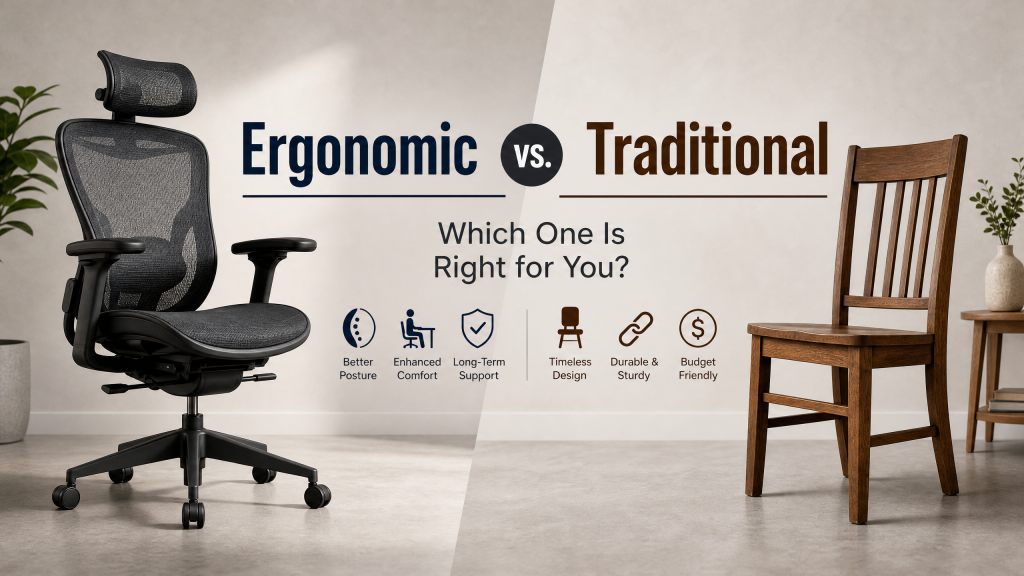
Ergonomic vs. Traditional Chairs: Which One Is Right for You?
Jun
Ergonomic vs. Traditional Chairs: Which One Is Right for You?
When it comes to choosing the right chair for your home or office, one of the most common questions people ask is whether they should go ergonomic or stick with a traditional design. Both have their merits, and the best choice ultimately depends on your specific needs, lifestyle, and the environment where the chair will be used. This article will give you a thorough breakdown of both options so you can make an informed decision.
What Defines an Ergonomic Chair?
The word “ergonomic” comes from the Greek words “ergon” (work) and “nomos” (natural laws). In the context of seating, an ergonomic chair is one that is specifically designed to support the natural posture of the human body, reduce physical stress, and prevent injury during prolonged use. These chairs typically include a wide range of adjustable features, including seat height, seat depth, lumbar support, armrest height and width, headrest position, and recline tension.
Ergonomic chairs are engineered with biomechanics in mind. The goal is to keep your spine in its natural S-curve position, your hips at a slightly open angle, your feet flat on the floor, and your arms relaxed at your sides. When all of these elements are properly aligned, the body experiences significantly less fatigue and strain over the course of a long workday.
What Makes a Traditional Chair Traditional?
Traditional chairs, in contrast, are designed primarily for aesthetic appeal and basic comfort rather than scientific ergonomic optimization. They often feature fixed dimensions, limited or no adjustability, and are made with a focus on matching specific decor styles. Think of classic wooden dining chairs, armchairs with carved details, or simple task chairs with basic padding.
Traditional chairs are not necessarily bad for you, especially if used for short periods or in settings where extended sitting is not the primary activity. However, they typically do not account for individual body variations and can contribute to poor posture over time if used for many hours daily.
Health Considerations
From a health standpoint, ergonomic chairs have a clear advantage for anyone who spends significant time seated. Poor posture from inadequate seating is a leading cause of chronic back and neck pain, which affects an enormous proportion of the working population. Ergonomic chairs are specifically designed to counteract the physical stresses of prolonged sitting by promoting proper spinal alignment and reducing pressure on intervertebral discs.
Traditional chairs, while often stylish and comfortable for shorter periods, can encourage slouching and forward head posture when used for hours at a time. Over the long term, this can lead to muscle imbalances, tension headaches, and even more serious spinal issues. This does not mean traditional chairs should be avoided entirely — they simply require more mindfulness about posture when used for extended periods.
Diving Deeper into Ergonomic Chair Features
Understanding the specific adjustments available in an ergonomic chair can help you appreciate its value and customize it to your body. These features are not just marketing buzzwords; they are critical for maintaining a healthy posture and maximizing comfort during long hours of sitting.
- Lumbar Support: This is crucial for maintaining the natural inward curve of your lower back. High-quality ergonomic chairs offer adjustable lumbar support, either in height, depth, or both, allowing you to position it precisely where your spine needs it most. Some advanced chairs even have dynamic lumbar support that adapts to your movements.
- Seat Height and Depth: Adjustable seat height ensures your feet can be flat on the floor with your knees at a 90-degree angle, or slightly open. Seat depth adjustment prevents the front edge of the seat from pressing into the back of your knees, which can restrict circulation, while also ensuring your back is fully supported by the backrest.
- Armrest Adjustability: Often overlooked, armrests that adjust in height, width, and even pivot (3D or 4D armrests) are essential. They allow your arms to rest comfortably at your sides, with your forearms parallel to the floor, reducing strain on your shoulders and neck when typing or using a mouse.
- Recline Mechanisms: Ergonomic chairs offer various recline functions, such as synchro-tilt (seat and back recline in a coordinated motion) or knee-tilt (the pivot point is closer to the front of the seat). These mechanisms allow you to shift your posture throughout the day, promoting blood flow and reducing static load on your spine.
- Headrest/Neck Support: While not all ergonomic chairs include a headrest, those that do offer crucial support for your neck and head, especially when reclining or taking short breaks. It helps prevent forward head posture and eases tension in the upper back.
Aesthetic Considerations
Here is where traditional chairs often have the edge. Ergonomic chairs, while functional, can sometimes feel clinical or out of place in home environments that prioritize warmth and decorative style. A beautiful carved wooden armchair or an elegantly upholstered dining chair is simply more visually appealing in certain contexts.
That said, the ergonomic chair market has evolved significantly in recent years. Modern ergonomic designs are increasingly stylish, with many brands offering chairs that blend excellent ergonomic functionality with sleek, contemporary aesthetics. Premium brands have managed to make ergonomic chairs that look right at home in even the most design-conscious spaces, often utilizing minimalist designs, high-quality fabrics, and a wide array of color options that complement modern office and home decor.
When a Traditional Chair Might Be the Better Fit
While the health benefits of ergonomic chairs for prolonged sitting are undeniable, there are many scenarios where a traditional chair is not only appropriate but often preferred. The key is understanding the intended use and duration of sitting.
- Dining Rooms: Traditional dining chairs are designed for relatively short periods of sitting during meals and social gatherings. Their primary role is often to complement the dining table and overall room decor.
- Accent Seating: In living rooms, entryways, or bedrooms, traditional armchairs or side chairs serve as decorative elements, providing occasional seating for guests or for brief tasks like putting on shoes.
- Waiting Areas: In professional settings like reception areas, traditional seating often provides a more welcoming and less “office-like” aesthetic for visitors who will only be seated for short durations.
- Specific Aesthetic Requirements: If you are furnishing a period-specific room, an antique-inspired space, or simply prefer a classic, timeless look, traditional chairs offer an unmatched variety of styles, materials, and craftsmanship that blend seamlessly with specific interior design themes.
- Short-Term Task Chairs: For tasks that require only 30-60 minutes of sitting at a desk, a well-padded traditional task chair might suffice, especially if budget is a significant concern.
In these cases, the investment in a highly adjustable ergonomic chair would be overkill, both functionally and aesthetically.
Cost Comparison
Ergonomic chairs, particularly those with a full range of adjustments and high-quality materials, tend to cost more than traditional chairs. Entry-level ergonomic office chairs start at a few hundred dollars, while premium models from top brands can cost over a thousand dollars. However, when you consider the health benefits and the reduction in costs associated with back pain treatment and lost productivity, the investment often makes excellent financial sense.
Traditional chairs span a wide price range depending on materials, craftsmanship, and brand. A simple wooden dining chair might cost as little as fifty dollars, while a handcrafted, upholstered accent chair from a luxury furniture maker might cost several thousand. The key is matching the investment to your actual usage needs, and remembering that a cheap ergonomic chair might offer fewer adjustments and less durability than a mid-range traditional chair.
Setting Up Your Ergonomic Chair Correctly
Simply owning an ergonomic chair isn’t enough; you must set it up correctly to reap its full benefits. A poorly adjusted ergonomic chair can be just as detrimental as a traditional one. Here’s a quick guide to optimal setup:
- Feet Flat on the Floor: Adjust your seat height so your feet are flat on the floor or on a footrest, with your knees forming an angle of 90 degrees or slightly greater. This reduces pressure on your lower back.
- Thighs Parallel: Ensure your thighs are parallel to the floor, and there’s a 2-4 finger gap between the front edge of the seat and the back of your knees. Adjust seat depth accordingly.
- Lumbar Support: Position the lumbar support to fit snugly into the natural curve of your lower back, typically just above your belt line. It should feel supportive, not pushing.
- Backrest Angle: Your backrest should support the natural S-curve of your spine. Recline slightly to open up your hip angle, ideally between 100-110 degrees, rather than a strict 90 degrees.
- Armrests: Adjust armrest height so your elbows are at a 90-degree angle, allowing your shoulders to relax. Your forearms should be parallel to the floor when typing.
- Monitor Position: Your monitor should be at arm’s length, with the top of the screen at or slightly below eye level. This prevents neck strain.
Regularly check your posture and make minor adjustments throughout the day. Don’t be afraid to experiment with the settings to find what feels best for your body.
Making the Right Choice
Our recommendation is simple: if you sit for more than four to six hours a day, an ergonomic chair is almost certainly the better investment for your health and long-term comfort. This is particularly true for office workers, gamers, students, or anyone who spends extended periods at a desk. The proactive prevention of musculoskeletal issues and the boost in comfort and focus far outweigh the initial cost.
If you need a chair primarily for dining, accent seating, or occasional use, a traditional chair may be perfectly appropriate and will likely offer better aesthetics for your space. For those who value a balance, some manufacturers are now offering “ergonomic-inspired” traditional chairs that incorporate basic ergonomic principles into more classic designs, though they typically lack the full adjustability of a dedicated ergonomic office chair.
At our store, we carry both ergonomic office chairs designed for maximum support and beautifully crafted traditional chairs to enhance any decor. Our knowledgeable staff is always happy to help you evaluate your options and find the perfect chair for your specific needs, ensuring comfort, style, and long-term well-being.
Frequently Asked Questions About Chairs
Are all ergonomic chairs expensive?
Not necessarily. While high-end ergonomic chairs can be a significant investment, there are many mid-range options that offer excellent adjustability and support at a more affordable price point. The cost often reflects the quality of materials, the range of adjustments, and the durability of components. It’s important to research and read reviews to find a chair that fits your budget and provides genuine ergonomic benefits, rather than just using the “ergonomic” label.
Can I use a traditional chair for my home office occasionally?
Yes, for very occasional use (e.g., less than an hour a day), a comfortable traditional chair can be acceptable. However, for regular work from home, even if it’s not a full 8-hour day, investing in an ergonomic solution is highly recommended. Prolonged sitting in a non-supportive chair, even for a few hours daily, can contribute to poor posture and discomfort over time.
How long do ergonomic chairs typically last?
The lifespan of an ergonomic chair varies greatly depending on its quality, materials, and usage. A high-quality ergonomic chair from a reputable brand can easily last 10-15 years, or even longer, with proper care. Budget-friendly options might last 3-7 years. Look for chairs with strong warranties as an indicator of manufacturer confidence in their product’s durability.
What’s the best way to clean my ergonomic or traditional chair?
Cleaning depends on the material. For mesh or fabric ergonomic chairs, a mild soap and water solution with a damp cloth is often sufficient for spot cleaning. For leather or faux leather, use specialized leather cleaners and conditioners. Wooden traditional chairs can be wiped with a damp cloth and polished with furniture polish. Always check the manufacturer’s cleaning instructions to avoid damaging the material.
Do I really need a headrest on my ergonomic chair?
A headrest is beneficial, but not always essential for everyone. It’s particularly useful if you tend to recline or take short breaks during your workday, as it supports your head and neck, preventing strain. If you maintain an upright posture most of the time, or if your monitor setup encourages good neck alignment, you might not find a headrest to be a critical feature. Many chairs offer adjustable or optional headrests, allowing you to choose based on your preference.
“`
