Post
Armchairs Through the Ages: Design Icons You Should Know
Jun
Armchairs Through the Ages: Design Icons You Should Know
Among all types of seating, the armchair occupies a special place in the history of furniture design. It is the most personal of chairs — a seat designed for one, providing the support of padded arms that allow complete relaxation of the upper body while the back is cradled and the mind is freed for reading, conversation, or quiet contemplation. Throughout history, the world’s greatest furniture designers have directed their most creative energies toward the armchair, producing designs that have become genuine cultural icons. From opulent French salons to minimalist modernist spaces, the armchair has evolved, adapted, and consistently offered a blend of comfort, style, and personal retreat. Here is an introduction to some of the most important armchair designs in history and what makes each of them significant, exploring their origins, design philosophies, and lasting impact on interior design.
The Bergère: French Comfort Elevated to Art
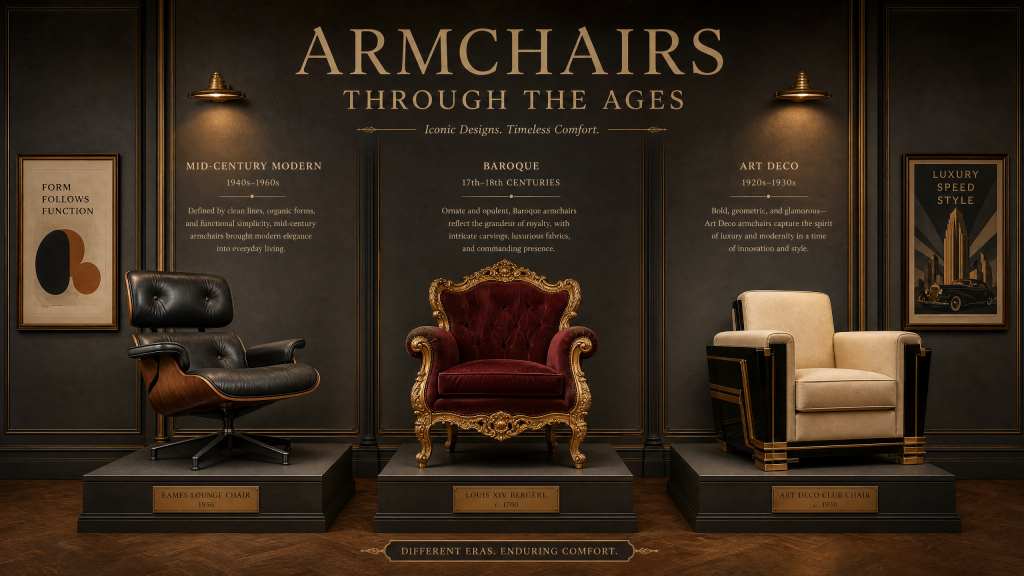
The bergère is a French armchair design that emerged in the early eighteenth century and remains influential today. Its defining characteristics are an enclosed, upholstered back and sides — unlike earlier European chairs that had open wooden frames — creating a deeply enclosed, cocoon-like seating experience. The upholstered seat cushion is typically loose, sitting on a fully upholstered base. This innovation, believed to have originated around 1725, marked a significant shift towards prioritizing personal comfort over purely ceremonial grandeur.
The bergère was revolutionary when it appeared because it prioritized comfort in a way that earlier formal furniture did not. It was a chair for private enjoyment rather than public performance, perfectly suiting the more intimate Rococo interiors of the era. Period bergères, often crafted from carved and gilded walnut or beechwood and upholstered in luxurious materials like silk damasks and brocades, represent some of the finest furniture craftsmanship ever produced. Modern interpretations maintain the essential enclosed, deeply upholstered character while adapting the aesthetic for contemporary tastes, making it a versatile piece for both traditional and transitional decor.
The Chesterfield Armchair: Victorian Grandeur
The Chesterfield armchair shares its name and design DNA with the famous Chesterfield sofa, featuring the characteristic deeply buttoned, tufted leather upholstery and rolled arms that are synonymous with Victorian-era luxury. The precise origins of the Chesterfield design are somewhat murky historically, but the style became firmly established as the definitive expression of English aristocratic comfort during the nineteenth century. Legend attributes its creation to the 4th Earl of Chesterfield, Lord Philip Stanhope, who supposedly commissioned a piece of furniture that would allow gentlemen to sit upright without creasing their garments.
The visual weight and presence of a Chesterfield armchair is considerable — it is a chair that makes an unmistakable statement about quality, tradition, and the serious enjoyment of leisure. Typically upholstered in rich, aged leather, its deep button-tufting not only creates a distinctive aesthetic but also helps to hold the upholstery in place, ensuring longevity. The low back and high rolled arms offer a unique ergonomic profile that encourages a formal yet relaxed posture. In genuine leather with careful hand-stitching and traditional button-tufting, a Chesterfield armchair represents a significant investment but also a piece of furniture that will likely last for generations, acquiring a beautiful patina over time. It remains a staple in libraries, executive offices, and elegant living rooms worldwide.
The Barcelona Chair: Modernist Masterpiece
Designed by Ludwig Mies van der Rohe for the German Pavilion at the 1929 International Exhibition in Barcelona, the Barcelona Chair is perhaps the most celebrated piece of modernist furniture ever designed. Its structure is deceptively simple: two X-shaped stainless steel frames support cushioned leather pads for the seat and back. The visual effect is one of extraordinary elegance and structural clarity, embodying Mies van der Rohe’s philosophy of “less is more” and his pursuit of architectural purity.
The Barcelona Chair was designed for a very specific context — to provide seating for King Alfonso XIII of Spain during the pavilion’s opening ceremony. The design needed to convey both royal honor and modernist ideals simultaneously. It succeeded so spectacularly that it became one of the most recognized and widely reproduced chair designs in history, still produced by Knoll International today in virtually unchanged form. Originally, the frame was bolted, but it was redesigned in 1950 with a seamless, one-piece frame for a more fluid aesthetic. The use of premium materials like polished chrome and fine leather elevates it beyond mere furniture to a sculptural art piece, making it a powerful statement in high-end contemporary interiors.
The Womb Chair: Mid-Century Comfort
Designed by Finnish-American architect Eero Saarinen in 1948 for Knoll, the Womb Chair is so named for the sensation it evokes — it literally wraps around the body and creates a sense of sheltered, enveloping comfort. Saarinen reportedly designed it in response to the request of Florence Knoll for a chair she could curl up in. The result is a revolutionary fiberglass shell chair upholstered in fabric or leather, mounted on a slender, four-legged steel base. Its organic, fluid shape was a radical departure from the rigid, rectilinear forms common in post-war design.
The Womb Chair’s significance lies in its challenge to the rectilinear tradition of furniture design. Its organic, shell-like form anticipates the biomorphic design directions that would emerge more fully in the 1960s and beyond. Saarinen’s innovative use of fiberglass for the shell allowed for a seamless, ergonomic shape that cradles the user in multiple sitting positions. It remains a defining piece of mid-century modern design and is still in production by Knoll, celebrated for its unique blend of sculptural beauty and unparalleled comfort, making it a favorite for relaxation in modern homes.
More Iconic Armchair Designs
The Eames Lounge Chair and Ottoman: American Modernism’s Embrace
Perhaps the most famous American armchair, the Eames Lounge Chair and Ottoman was designed by Charles and Ray Eames in 1956 for Herman Miller. Their goal was to create “the warm, receptive look of a well-used first baseman’s mitt.” This masterpiece of comfort and sophisticated design is instantly recognizable for its molded plywood shells (often rosewood or walnut), luxurious leather cushions, and polished aluminum base. It represents a pinnacle of mid-century modernism, combining industrial production techniques with artisanal craftsmanship. Its enduring appeal lies in its timeless aesthetic and supreme comfort, making it a coveted piece in executive offices, upscale living rooms, and design museums worldwide.
The Wingback Chair: A Timeless Classic for Intimacy and Warmth
Dating back to the 17th century, the Wingback chair (or Wing Chair) is characterized by its high back and “wings” protruding from the backrest down to the armrests. Originally designed to protect the sitter from drafts in large, chilly manor houses, these wings trapped the heat from a fireplace and shielded the occupant from cold air currents, creating a cozy and intimate space. Over centuries, it evolved from a purely functional piece into a versatile design icon. Its grand silhouette and commanding presence make it a focal point in both traditional and transitional interiors, perfect for reading nooks or quiet conversations.
The Egg Chair: Organic Form Meets Function
Conceived by the legendary Danish designer Arne Jacobsen in 1958 for the Radisson SAS Royal Hotel in Copenhagen, the Egg Chair is a hallmark of organic modernist design. Part of Jacobsen’s complete vision for the hotel’s interior, its distinctive egg-like shape, often upholstered in fabric or leather, creates a private alcove in public spaces. The chair was innovative for its time, utilizing a strong foam shell underneath the upholstery to achieve its unique sculptural form. Mounted on a star-shaped aluminum base, it often features a swivel mechanism, making it a favorite in hotels, corporate lobbies, and sophisticated residential interiors.
Choosing the Right Armchair for Your Space
Selecting the perfect armchair involves more than just aesthetics; it’s about finding a piece that complements your lifestyle, space, and comfort needs. Consider these key factors:
- Style: Match the armchair’s design (e.g., classic, modern, minimalist) with your existing decor.
- Size: Measure your space to ensure the armchair fits proportionally without overcrowding.
- Comfort: Test the seat depth, backrest height, arm support, and cushion firmness to suit your preferences.
- Material: Choose between durable leather (ages beautifully) or diverse fabrics (color, pattern, texture options) based on your needs for maintenance and feel.
- Functionality: Decide if it’s for primary seating, an accent, or a reading spot. Some offer swivel or recline features.
Caring for Your Iconic Armchair
Proper care ensures your armchair remains a cherished piece for years. Follow these general tips:
- Regular Cleaning: Vacuum fabric upholstery; wipe leather with a soft, damp cloth.
- Spot Cleaning: Blot spills immediately; use appropriate cleaners for fabric or specialized leather cleaner.
- Protect from Sunlight: Position away from direct sun to prevent fading and material damage.
- Rotate Cushions: Flip and rotate removable cushions periodically for even wear.
- Professional Cleaning: Consider professional services for fabric armchairs every 1-2 years.
The Enduring Appeal of Armchairs in Modern Interiors
Beyond their historical significance, armchairs hold a vital place in contemporary interior design. They serve multiple purposes:
- Focal Points: Anchor a room and establish an aesthetic.
- Personal Retreats: Offer a defined zone for relaxation in open-plan living.
- Statement Pieces: Act as sculptural elements, elevating room design.
- Color and Texture Accents: Introduce depth and personality to a scheme.
- Functional Seating: Provide essential comfortable seating for any room.
Frequently Asked Questions About Iconic Armchairs
- What makes an armchair “iconic”?
- An iconic armchair is a design that has significantly influenced furniture history, boasts unique aesthetics, uses innovative materials, and maintains popularity over decades. They are often linked to renowned designers or cultural movements.
- Are original iconic armchairs a good investment?
- Yes, genuine originals from authorized manufacturers can be excellent investments. They often appreciate in value due to craftsmanship, limited production, and historical significance. Always verify authenticity.
- How do I distinguish between an original and a replica?
- Authentic designs come from licensed manufacturers (e.g., Knoll, Herman Miller). Look for labels, serial numbers, and assess the quality of materials and construction. Replicas often use inferior materials and lack precise proportions.
- Can iconic armchairs fit into modern minimalist decor?
- Absolutely. Many, especially Mid-Century Modern and International Style pieces like the Barcelona Chair, complement minimalist interiors with their clean lines, simple forms, and industrial materials, often serving as sophisticated focal points.
- Are these iconic chairs comfortable for everyday use?
- Comfort was a primary design consideration for many, such as the Womb and Eames Lounge Chairs, specifically designed for relaxation. Others, like the Barcelona, offer formal but comfortable seating. Comfort depends on the specific design and personal preference.
Bringing Iconic Design Home
The journey through the history of armchairs reveals a fascinating evolution of design, craftsmanship, and human comfort. From the intimate embrace of the Bergère to the architectural precision of the Barcelona, each iconic armchair tells a story and offers a unique experience. Many of these timeless designs are available today in original or inspired forms across various price points, allowing you to incorporate a piece of design history into your own space. Our store carries a curated selection of armchairs, drawing on the greatest traditions of furniture design history while offering the comfort, quality, and style your home deserves. Visit us to explore our collection and find your own personal icon, transforming your living space with a chair that’s more than just furniture – it’s a legacy.
“`
