Post
Understanding Chair Height: A Guide to Finding Your Perfect Fit
Jun
Understanding Chair Height: A Guide to Finding Your Perfect Fit
One of the most overlooked aspects of chair selection is height — and yet it is one of the most important factors determining whether a chair is comfortable or not for any individual user. A chair that is the wrong height causes discomfort and poor posture regardless of how well it is designed in other respects. This guide will help you understand the principles of proper chair height, how to measure yourself and your space, and how to choose chairs that fit your body correctly.
Why Chair Height Matters
When you sit in a chair, your body adopts a posture that is fundamentally determined by the relationship between three heights: the height of the chair seat, the height of any surface you are working at or dining at, and your own body dimensions. When these three factors are in correct proportion, your body can maintain a neutral, comfortable posture with minimal muscular effort. When they are misaligned, you compensate with your muscles and joints, leading to fatigue, discomfort, and over time, pain. Specifically, an improperly set chair can lead to a cascade of ergonomic issues. If your chair is too high, your feet may dangle, putting pressure on the backs of your thighs and restricting blood flow, which can lead to numbness, tingling, and even deep vein thrombosis. Conversely, if your chair is too low, your knees will be elevated above your hips, causing your pelvis to tilt backward and flatten the natural curve of your lumbar spine. This poor alignment can result in chronic lower back pain, neck strain, and shoulder tension. Proper height ensures optimal circulation, spinal alignment, and muscular relaxation.
Standard Chair Heights and Who They Fit
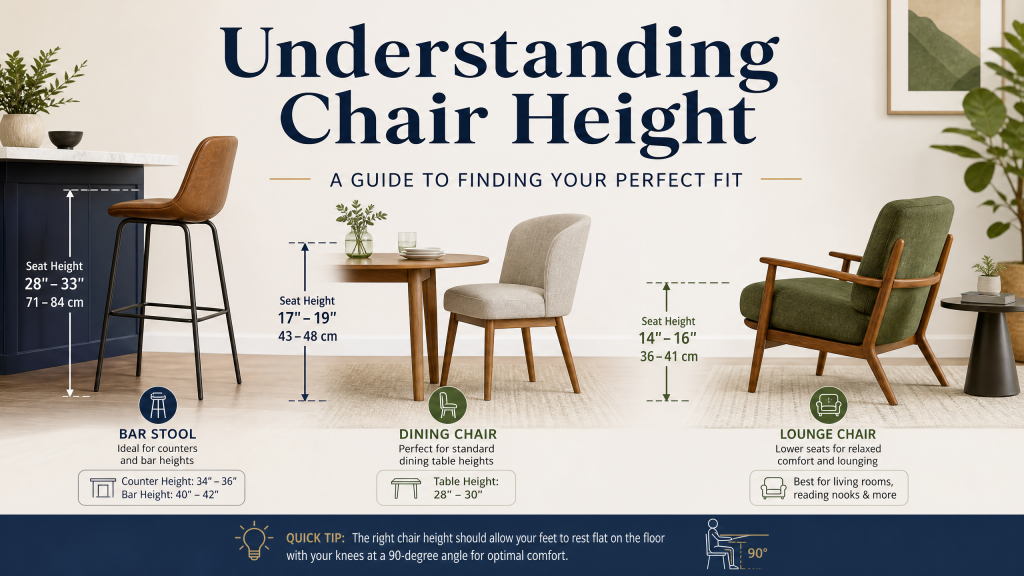
Standard dining chairs typically have a seat height of around seventeen to nineteen inches from the floor. This height is designed to work well for adults of average stature — roughly five feet four inches to five feet ten inches tall — when paired with a standard dining table height of twenty-eight to thirty inches. If you fall significantly outside this height range, you may find that standard chair and table combinations are not comfortable for you.
Bar stools and counter stools have seat heights designed to work with bar-height tables and kitchen counters respectively. Counter-height stools typically sit between twenty-four and twenty-six inches from the floor, while bar-height stools sit between twenty-eight and thirty inches. Choosing the right stool height for your counter or bar surface is essential — sitting too low results in your arms being raised uncomfortably to reach the surface, while sitting too high forces your legs into an uncomfortable position with limited support.
Office Chair Height
Office chairs almost universally feature adjustable seat height, typically adjustable over a range of approximately sixteen to twenty-one inches. This range accommodates the majority of the adult population, but individuals who are very tall or very short may need to seek out chairs with extended adjustment ranges or consider adding a footrest to their setup.
Setting your office chair at the correct height is a process. Begin by adjusting the chair so that your feet rest flat on the floor. Then check your thigh position — ideally, your thighs should be approximately parallel to the floor or very slightly tilted downward toward the knees. Finally, evaluate your desk or keyboard height. If your shoulders are hunched upward to reach a high desk or keyboard, the desk surface is too high for your adjusted chair height; consider raising your chair slightly and using a footrest, or lowering your desk surface. Furthermore, proper chair height ties directly into the height of your monitor and input devices. Your monitor should be positioned so that the top third of the screen is at eye level, allowing you to view it without craning your neck. Your keyboard and mouse should be close to your body and at an ergonomic height that allows your wrists to remain straight and relaxed, preventing repetitive strain injuries like carpal tunnel syndrome. Adjustable-height desks offer even greater flexibility in achieving the perfect ergonomic setup.
Seat Depth and Width
While this guide focuses primarily on chair height, seat depth and width are equally important ergonomic dimensions. Seat depth — the distance from the front edge of the seat to the backrest — should allow you to sit with your back against the backrest while leaving two to four inches of space between the back of your knees and the seat’s front edge. A seat that is too deep for your leg length forces you to either sit forward and lose back support, or sit back and create pressure behind the knees that restricts circulation.
Seat width should accommodate your hips comfortably with a small amount of space on either side. A seat that is too narrow creates pressure on the hips and outer thighs, while a seat that is too wide may force you to sit in an asymmetric position or prevent you from using armrests comfortably.
Comprehensive Ergonomic Features Beyond Height
While seat height is paramount, a truly ergonomic chair integrates several other features for holistic support:
- Backrest Support: Essential for maintaining the natural S-curve of your spine, especially in the lumbar (lower back) region. Look for adjustable lumbar support.
- Armrests: Should be height and width adjustable to allow your arms to rest gently, forming an L-shape at the elbow, supporting forearms without shrugging shoulders.
- Seat Pan Adjustments: Beyond depth, some chairs offer seat tilt (to open hip angle) or forward tilt (for active sitting), promoting better circulation and posture.
- Material & Cushioning: High-density foam cushioning provides durable support, while breathable fabrics like mesh prevent heat buildup for long-term comfort.
Considering these features ensures a chair that supports your entire body, not just your lower half.
Essential Ergonomic Accessories for Optimal Fit
Sometimes, achieving the perfect fit requires a little help from well-chosen accessories:
- Footrests: Crucial for shorter individuals or when your chair must be set high for your desk. They ensure feet are supported, maintaining parallel thighs and improving circulation.
- Lumbar Support Cushions: Supplement a chair lacking adequate lumbar support, maintaining the natural curve of your lower spine to prevent slouching and back strain.
- Monitor Risers/Arms: Elevate your screen so the top third is at eye level, preventing neck strain.
- Keyboard Trays: If your desk is too high, an under-desk tray positions your keyboard and mouse ergonomically, keeping wrists straight and preventing strain.
These additions can significantly enhance comfort and prevent discomfort.
Measuring for Your Perfect Chair
To find chairs that will truly fit your body, take a few simple measurements before you shop. Measure your floor-to-knee-crease height while seated in a posture where your thighs are parallel to the floor. This gives you your ideal seat height. Measure your hip width while seated. Measure from the back of your compressed buttocks to the back of your knee — this is your ideal minimum seat depth. Armed with these measurements, you can evaluate any chair with confidence.
Frequently Asked Questions (FAQ) About Chair Height
- Q: Why do my feet need to be flat on the floor?
- A: It ensures proper weight distribution, reduces pressure on your thighs, improves circulation, and stabilizes your posture. Dangling feet cause discomfort and poor alignment.
- Q: What if my desk is too high for my correctly adjusted chair?
- A: Consider a keyboard tray to lower your input devices and a monitor riser for your screen. Alternatively, if feasible, raise your chair slightly and use a footrest.
- Q: Can children use adult chairs?
- A: Not ideally for extended periods. Children need chairs that fit their proportions. Use child-specific ergonomic chairs, or boosters with footrests on adult chairs.
- Q: How often should I readjust my chair height?
- A: Whenever you feel discomfort, change workspaces, or if multiple people use the chair. A quick check at the start of each prolonged sitting session is good practice.
Our staff is trained to help customers find chairs that fit their bodies correctly. Visit our showroom to try our selection firsthand, and bring your measurements so our team can guide you to the options most likely to be a perfect ergonomic fit for your unique body dimensions.
